
Aging in Place: How to Design a Kitchen and Bath You Won't Outgrow
We hear some version of this pretty often in the showroom: “We're planning to stay in this house for a long time, so we want to do it right.”
That's a smart way to approach a remodel, and increasingly, doing it right means thinking beyond what looks good today and considering what will still work well in 10, 15, or 20 years.
This approach is called aging in place, and it's the idea of designing your home so you can stay in it comfortably as you get older, rather than being forced to move or retrofit later at greater cost and disruption.
According to Houzz's 2026 Kitchen Trends Study, 31 percent of homeowners completing kitchen renovations are specifically addressing the needs of aging household members. That's up five percentage points from the previous year. In Asheville, where so many residents are either retiring or planning ahead for the long term, that number doesn't surprise us at all.
The Best Time to Add These Features Is During a Remodel
The best time to incorporate aging-in-place features is during a remodel when you're already tearing out cabinets and retiling a shower, adding a curbless entry or adjusting counter heights costs very little. Doing it later, as a standalone project, can mean significant additional work and expense.
Most of these features don't look like accessibility features. Good universal design is just good design. A curbless shower is beautiful. Deep drawers instead of lower cabinets are more functional for everyone. Pull-out pantry shelves are easier to use at 35 than at 65, but they're great at both ages. Nobody walks into a well-designed kitchen and thinks, "This was built for someone who is planning ahead." They just think it's a really good kitchen.
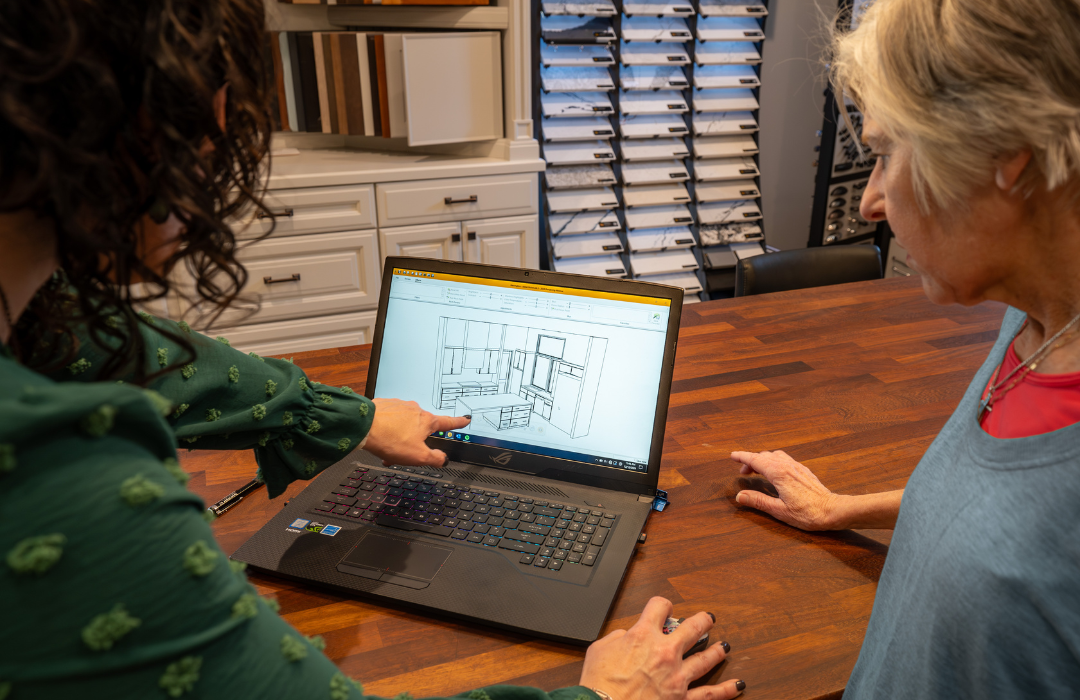
Aging In Place In the Kitchen
The kitchen is where aging-in-place planning tends to have the biggest impact, because it involves so much daily activity.
Counter height matters more than most people realize. Standard 36-inch counters work well for average-height adults, but if your household includes shorter people, taller people, or someone who uses a wheelchair now or might in the future, building in varied counter heights gives you more flexibility. Islands are a natural place to do this.
Deep drawers instead of lower cabinets are one of the most practical upgrades you can make. Rather than crouching down and reaching into the back of a cabinet to find a pot, everything is visible and accessible at waist height. Wellborn and Starmark both offer drawer configurations that work beautifully in this context.
Pull-out shelves in base cabinets serve the same purpose. Pull-out pantry towers are especially useful, and corner solutions like lazy Susans or pull-out corner trays mean you never have to get on your knees to find something that got pushed to the back.
Hardware matters too. Lever-style hardware is easier to operate than knobs, especially for anyone with arthritis or reduced grip strength. We carry Jeffrey Alexander hardware in a wide range of styles, including plenty of bar pulls and lever handles that look great in any kitchen.
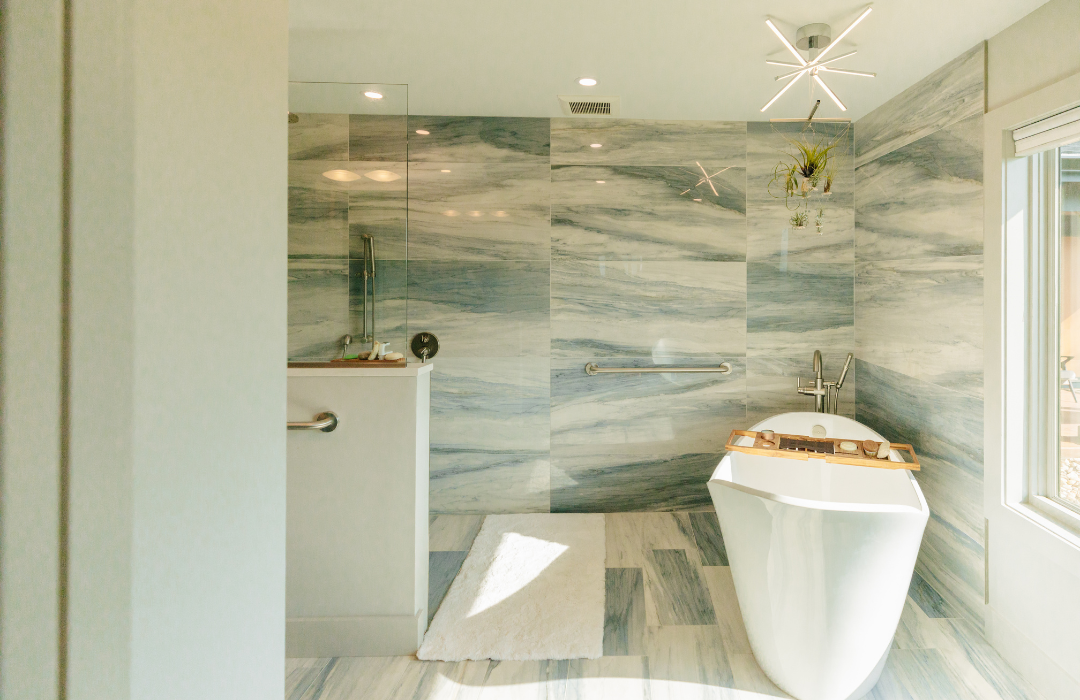
Aging In Place In the Bathroom
Houzz's research shows that 66 percent of homeowners address special needs during bathroom remodels. Curbless showers are one of the most consistently requested features, and not just for accessibility reasons. They also look clean and modern, and they're easier to clean than a traditional shower pan with a curb.
A curbless (or zero-threshold) shower eliminates the step over a curb that can become a tripping hazard. Paired with a linear drain and large-format tile on the floor, it's one of the most popular bathroom upgrades we help with right now. It works in a contemporary bathroom, a transitional space, or something more traditional, depending on the tile and fixtures you choose.
Grab bars have come a long way in terms of design. Today's options integrate seamlessly with the rest of your hardware and tile in a non-institutional way. Many clients choose to install reinforced blocking in the walls during a remodel, even if they don't install grab bars right away, so the option is there later without having to open the walls again.
Flooring choices matter here, too. Matte porcelain tile and natural stone with a honed or textured finish provide grip underfoot in a wet environment, while still looking beautiful. Radiant heating under the floor also helps because a warm floor is one you're more likely to step onto barefoot, which means no reaching for a rug that could become a slip hazard.
Vanity height is another consideration. Comfort-height vanities at 34-36 inches (rather than the standard 32) are easier on the back. And if there's any chance a family member will use a wheelchair, floating vanities with open space underneath are the way to go.
It's About Longevity, Not Age
You don't have to be planning for your 80s to benefit from this kind of thinking. If you're doing a remodel and planning to stay in your home for a long time, universal design features make your space more functional and more livable for everyone who uses it.
They also tend to hold their value well. Buyers who are thinking about their own futures appreciate homes that have already been thoughtfully designed with longevity in mind.
Let's Talk About Your Space
If you're planning a kitchen or bath remodel and want to think through what aging-in-place design could look like in your specific home, our designers are a great resource. We can walk you through the options during a showroom visit and help you think about how to integrate these features in a way that fits your style and your budget.
Call us at 828-252-1022 or contact us here to schedule an appointment at our 172 Charlotte Street showroom. We'd love to help you design a space that works for you today and well into the future.
Let’s Talk!
Visit us and shop our extensive range of tiles, counters, cabinets, and more.